My family doesn't do things halfway. When someone suggested a trivia night, there was a poster by the next day. A real one, with a date, a time, the categories (Guess the Song, Pinoy Trivia, Name the Face, Puzzles and Riddles, Sports, Pop Culture), and "bring your own snacks" at the bottom.
What there wasn't, was a way to actually run it.
The plan in my notes was simple enough: everyone joins on their phone, groups answer together, answers get revealed on the TV. I'd already built 25 Bingo for our bingo nights, so I knew the shape of this kind of app. I just didn't have long. The game was on Monday. I started on Saturday.
Grilled Before Building
Before writing any code, I had Claude Code interview me about the game. Not "what features do you want", but the annoying, specific questions you only think of halfway through building: How does a team settle on one answer when four people are typing? What happens when someone's phone dies mid-question? Who checks if "Bohemian Rapsody" counts? What if two teams tie?
Fourteen questions in the first round, nine in the second. Every one of them turned into a rule the app follows. That half hour saved me from at least three rewrites.
How It Works
There are three screens, and each one has one job.
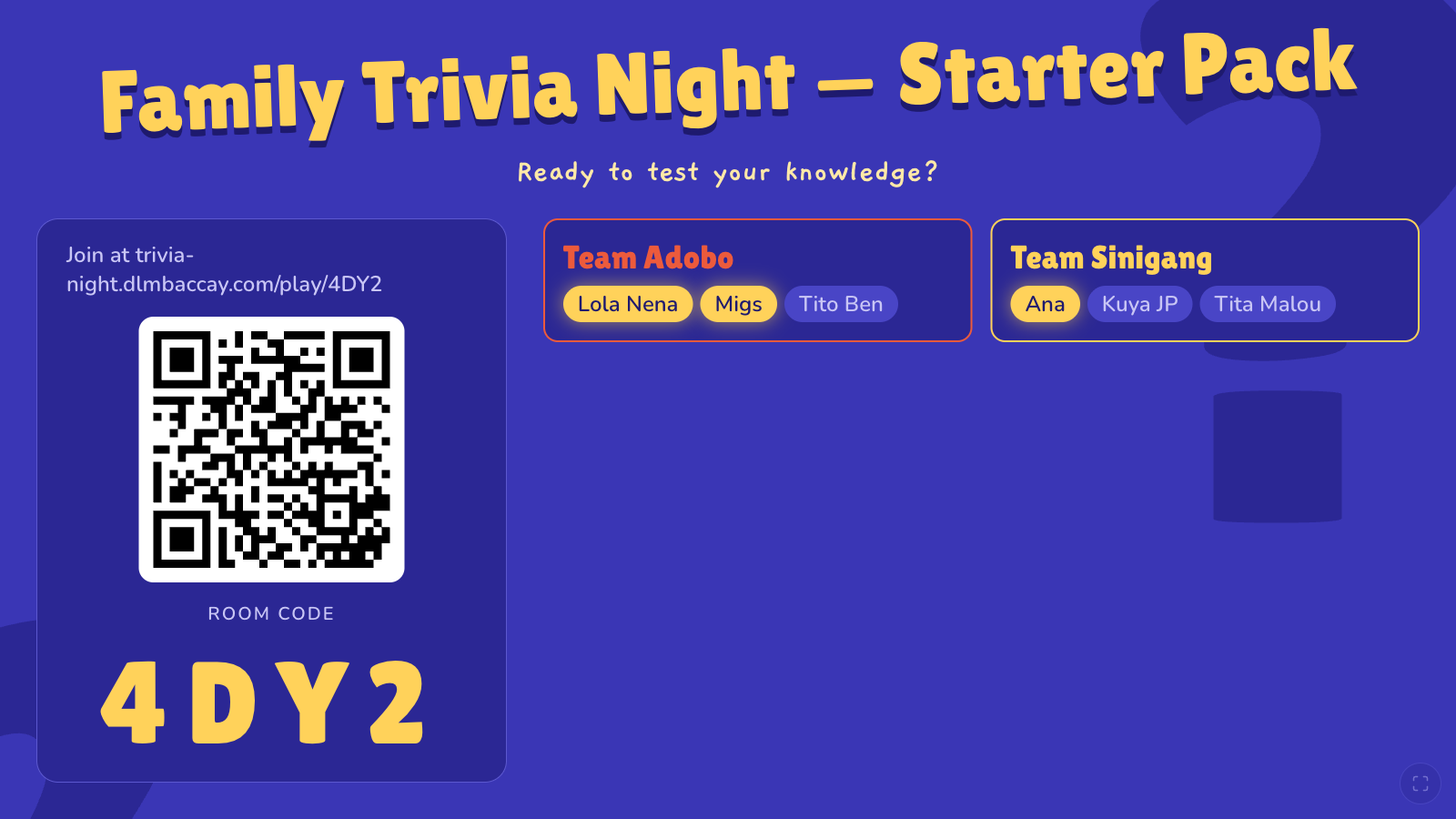
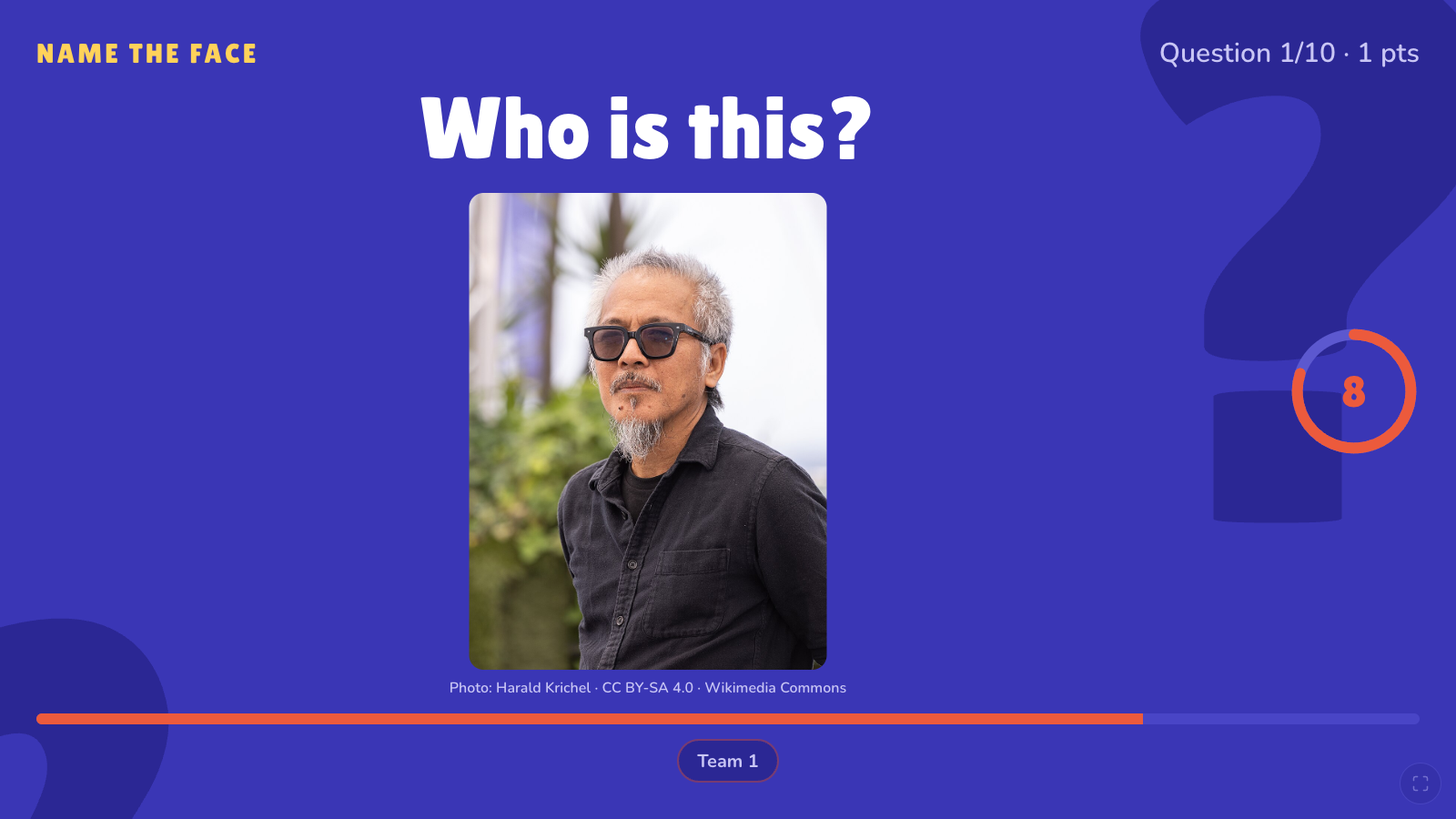
The TV is the stage. It shows the room code and a QR code, the question with a countdown ring, every team's answer when time's up, then the correct answer in big yellow letters.
The host's phone is the remote. One gold button that always says what happens next: Show question 1, Time's up, Reveal correct answer, Next question. It also shows the answer key, which is exactly why it's not on the TV.
Everyone else's phone is where the game happens. You pick your team, then your name (the roster is set up beforehand, so no typing names at the door), and you play.
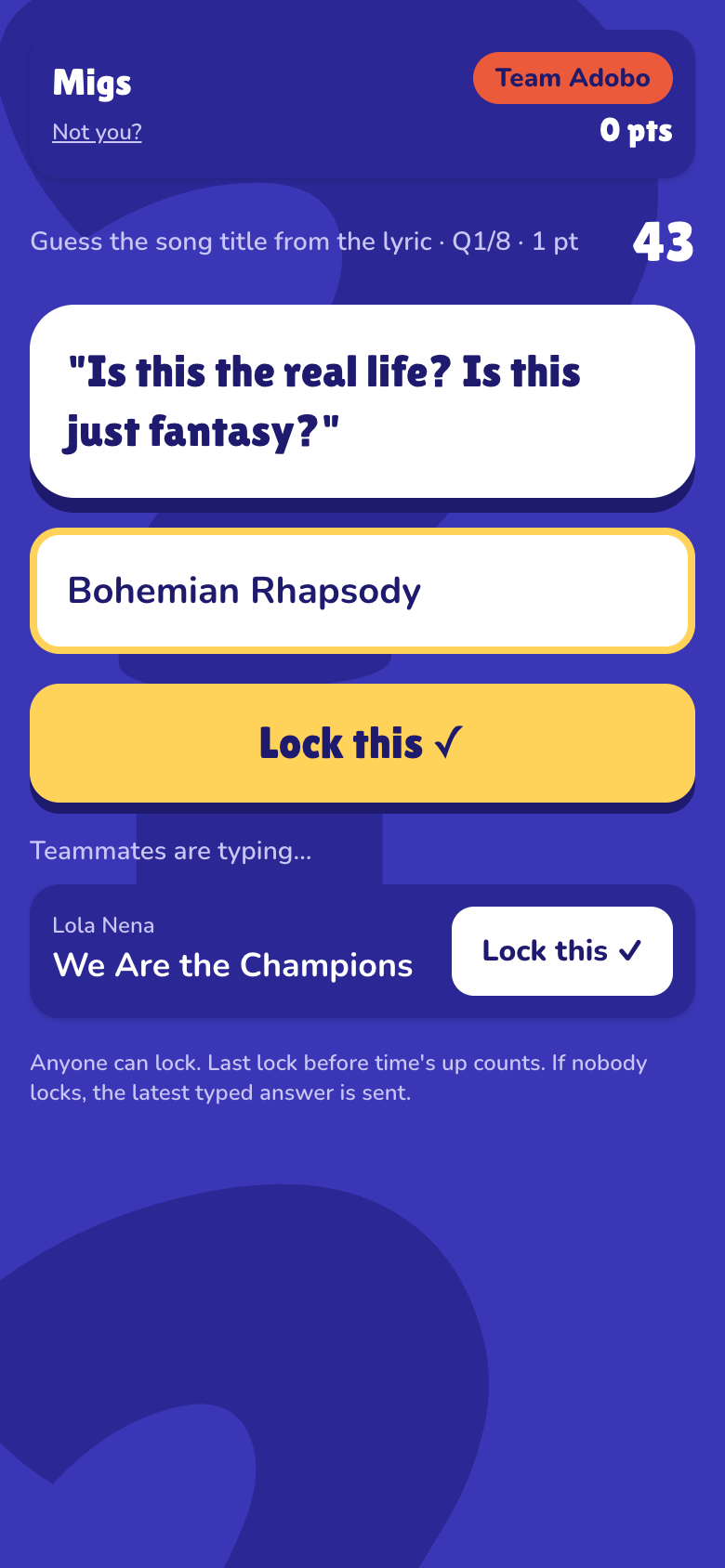
The part I'm proudest of is how teams answer. Everyone on a team types, and you see your teammates' answers appear under yours as they type. Then someone taps Lock this on the best one. Anyone can change the lock until time runs out. And if nobody locks anything, the latest typed answer gets sent anyway, so no team ever gets zero just for forgetting to tap a button.
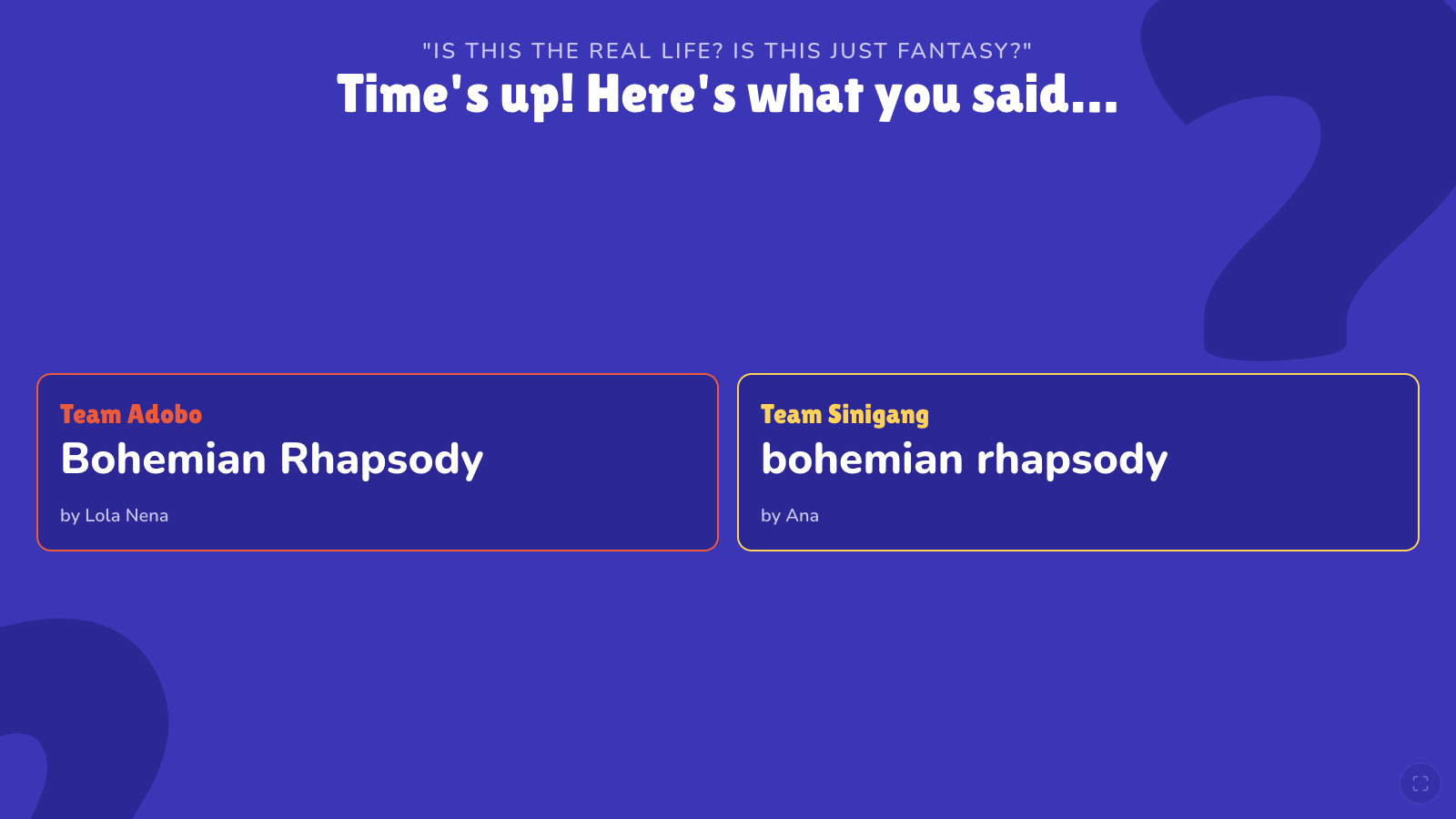
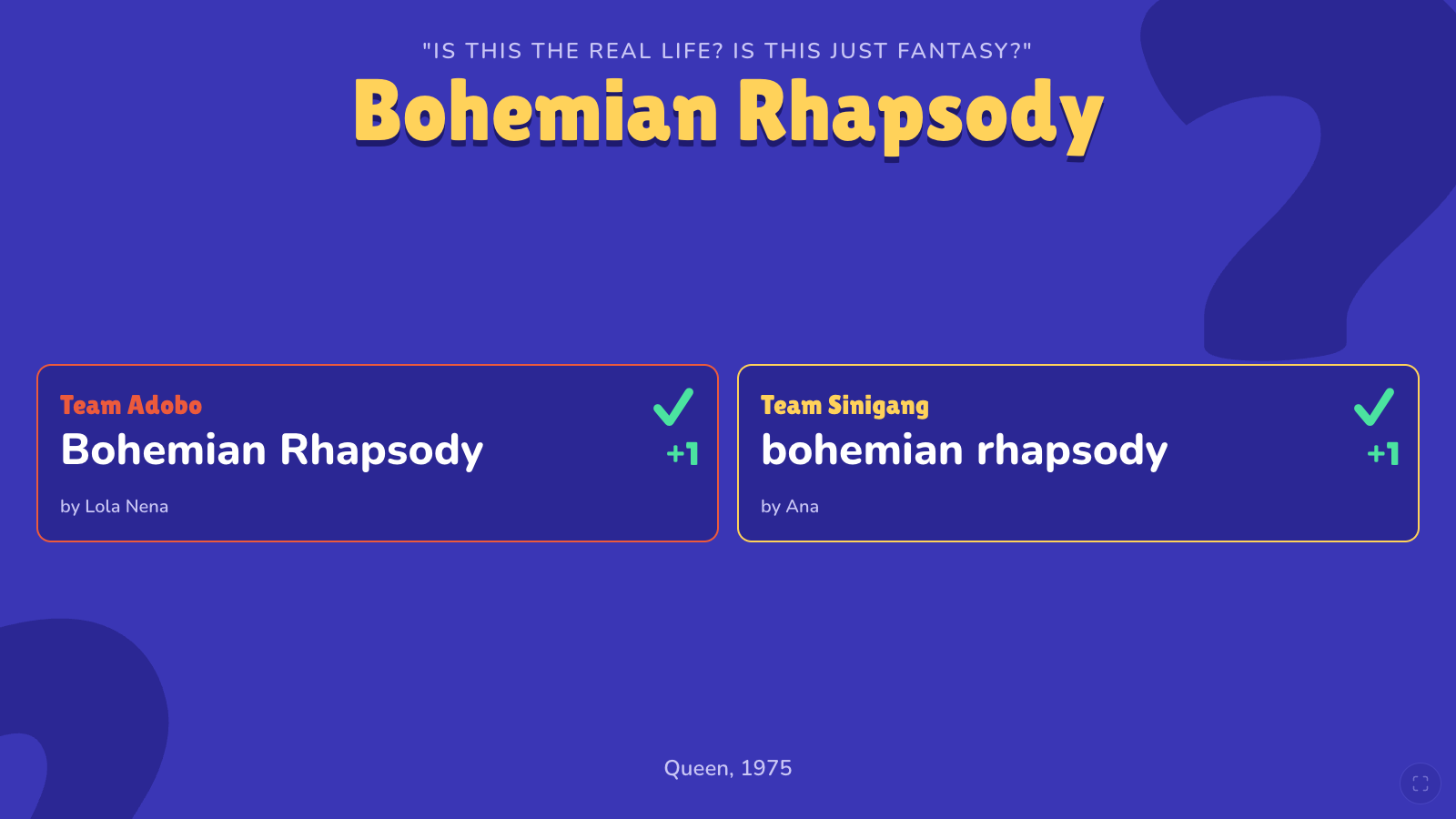
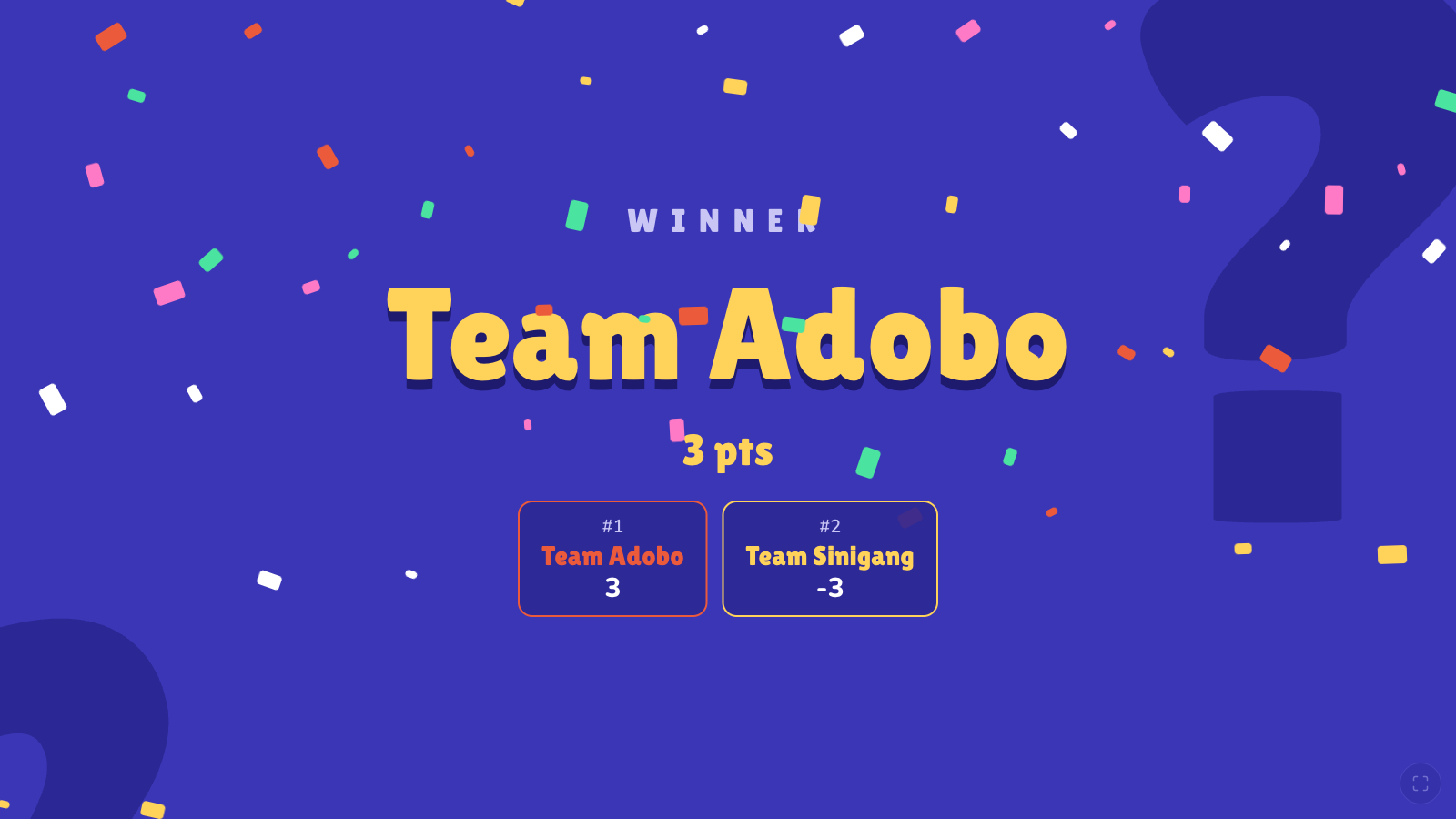
When the timer hits zero, every team's answer flips in on the TV at once. That's the moment the room gets loud. Then the host checks the marks (✓, ½ or ✗, because "Rhapsody" spelled wrong deserves half), taps reveal, and the points land.
There's a final wager round (bet up to your score, win it or lose it), a closest-number tiebreaker, and an End game button for when the snacks run out before the questions do.
The Questions Are a Team Effort Too
I didn't want to be the only one writing questions, so there's an admin side my cousins can log into and edit at the same time. You see who else is in the quiz, and which question they have open.
Typing sixty questions one by one is miserable, though, so I added two shortcuts. New quiz lets you tick the rounds you want and how many questions each, and creates all of them ready to fill in. Paste questions takes one question per line, like Question | Answer | alternate spellings, with a * marking the right multiple choice option.
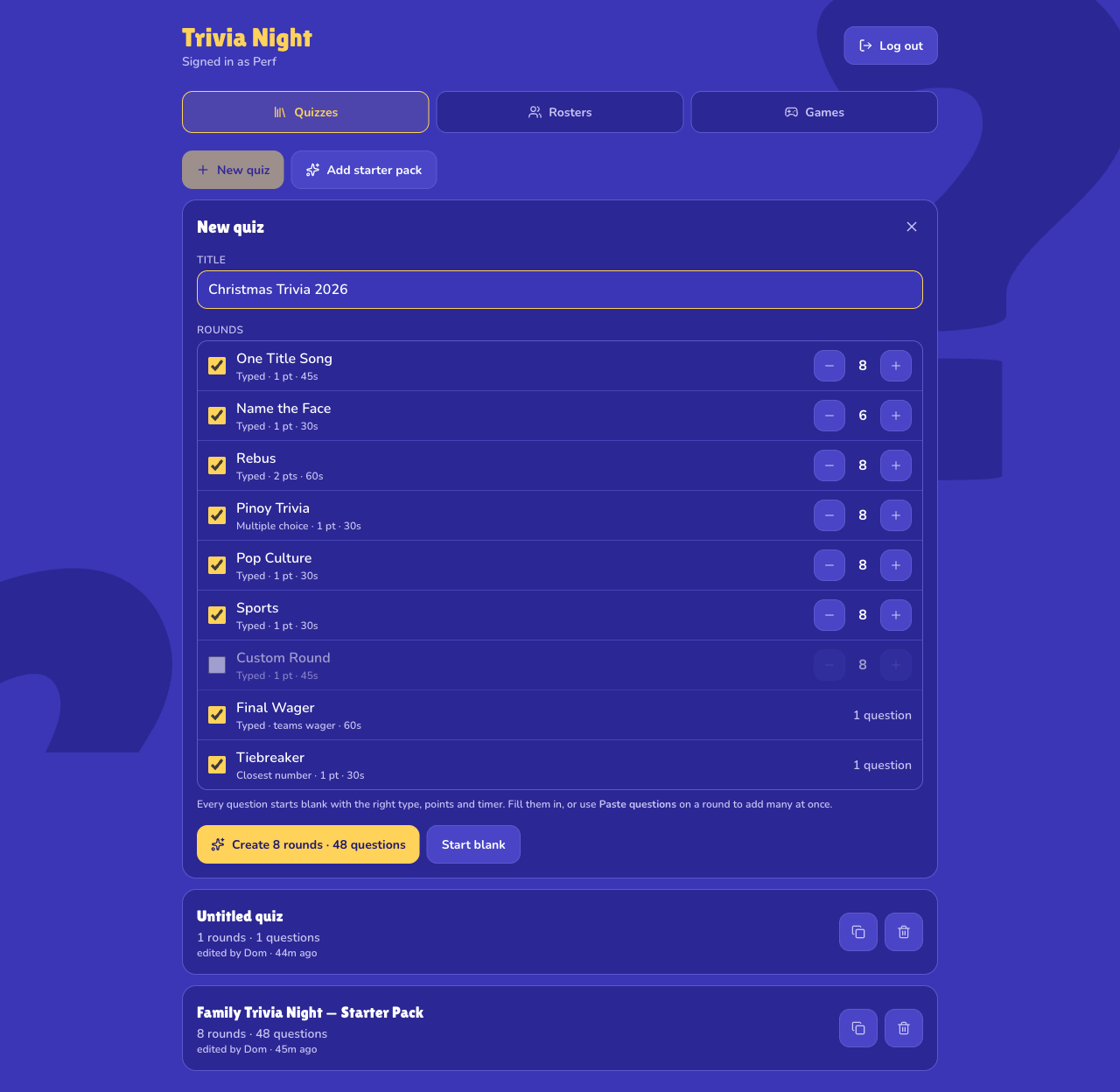
That format turned out to be the real unlock. It's exactly what ChatGPT or Claude can produce, so research becomes: give it a topic, paste the result in. I also wrapped it in a Claude Code skill, so I can run /trivia-import on a markdown file of rounds and have a whole quiz in the library a minute later, photos included. Name the Face pulls real photos from Wikimedia Commons and credits the photographer under each one.
The Technical Bits Worth Knowing
Same stack as bingo, on purpose. Next.js on Vercel and Supabase Realtime. The database is the source of truth, every screen subscribes to changes on the game, and the things that don't need saving (teammates' half-typed answers, a lock showing up on your teammate's phone) go phone-to-phone over a broadcast channel instead.
Games freeze a copy of the quiz. When a game starts, it snapshots the questions. My cousins can keep editing the library mid-game and nothing breaks for the people playing.
Answer keys never reach the phones. Every write goes through server actions, and the public key can only read game state. Somebody opening dev tools on their phone gets nothing. (It's family. Someone would have tried.)
Testing caught a bug I never would have. I had an automated browser play full games: a host, a TV and three phones, 147 taps of the Next button. It found that a quick double-tap could skip a step entirely. The second tap landed before the screen had caught up, so it skipped the final wager. Now every tap tells the server which step it thinks it's on, and stale taps are ignored.
The slowest thing wasn't the code, it was geography. The first version took five seconds to start a game, and adding a round took two. The app's server was running in Washington, D.C. while the database lived in Seoul, so every query crossed the Pacific, sometimes eight times per tap. Moving the server next to the database, merging queries and making the UI respond instantly took adding a round from 2.4 seconds to 0.03, and starting a game from 5 seconds to 1.5.
// One rule decides which image a question shows, so the TV, phones and editor always agree.
export function shownImage(q: QuestionImageFields): ShownImage | null {
  if (q.image_url) return { url: q.image_url, credit: null, source: 'upload' }
  if (q.image_web_url) return { url: q.image_web_url, credit: q.image_credit || 'Image from the web', source: 'web' }
  return null
}
It Even Looks Like the Poster
The first version had a dark game-show look that I liked. Then I saw the family poster again (cobalt blue, sunny yellow "TRIVIA", a big tomato-red question mark) and it was obviously better. So the whole app took the poster's colors and chunky lettering, with giant faded question marks behind every screen. It feels like the poster came to life.
Game Night
We played the Hard Edition first. Ten-to-fifteen-second timers, because my family decided anything longer was too generous.
Then they wanted a second game. So, with everyone literally waiting, I gave Claude Code the new rounds (flags, songs with lyrics my cousin typed out, and fifteen faces), and a few minutes later Game 2 was in the library with every flag and photo attached. We played that too.
What I Shipped
Trivia Night lives at trivia-night.dlmbaccay.com. One laptop for the TV, one phone to host, and everyone else just scans the QR code.
The stack in full: Next.js (App Router), Supabase (Postgres, Realtime, Storage), Tailwind, Framer Motion, deployed on Vercel, built with Claude Code.
Like bingo, this one isn't really about the stack. It's a thing my family made a poster for, and then actually used. If you're a developer whose family keeps inventing game nights, you already know what your next weekend project is.